Fall Deck & Patio Maintenance: Protecting Your Outdoor Investment Before the Season Ends
Protect Your Outdoor Space Before the First Frost Sets In
Your deck or patio has carried you through another Maine summer — cookouts, evenings by the water, long weekends outside. Before you close it up for the season, a little fall maintenance goes a long way toward protecting that investment through months of snow, ice, and freeze-thaw cycles.
Homeowners across Wells, Kennebunk, York, Eliot, and Ogunquit often wait until spring to think about deck repairs. But the damage that shows up in April usually started the previous fall — trapped moisture, loose boards, or unsealed wood left to fight the winter alone.
Why Fall Maintenance Matters in Maine
Wood decks expand and contract with temperature swings. Left unprotected, moisture gets into the grain, freezes, and forces the wood apart — leading to splitting, warping, and rot that's far more expensive to fix than to prevent. A few hours of maintenance now can save a full deck rebuild later.
Clean the Surface Thoroughly
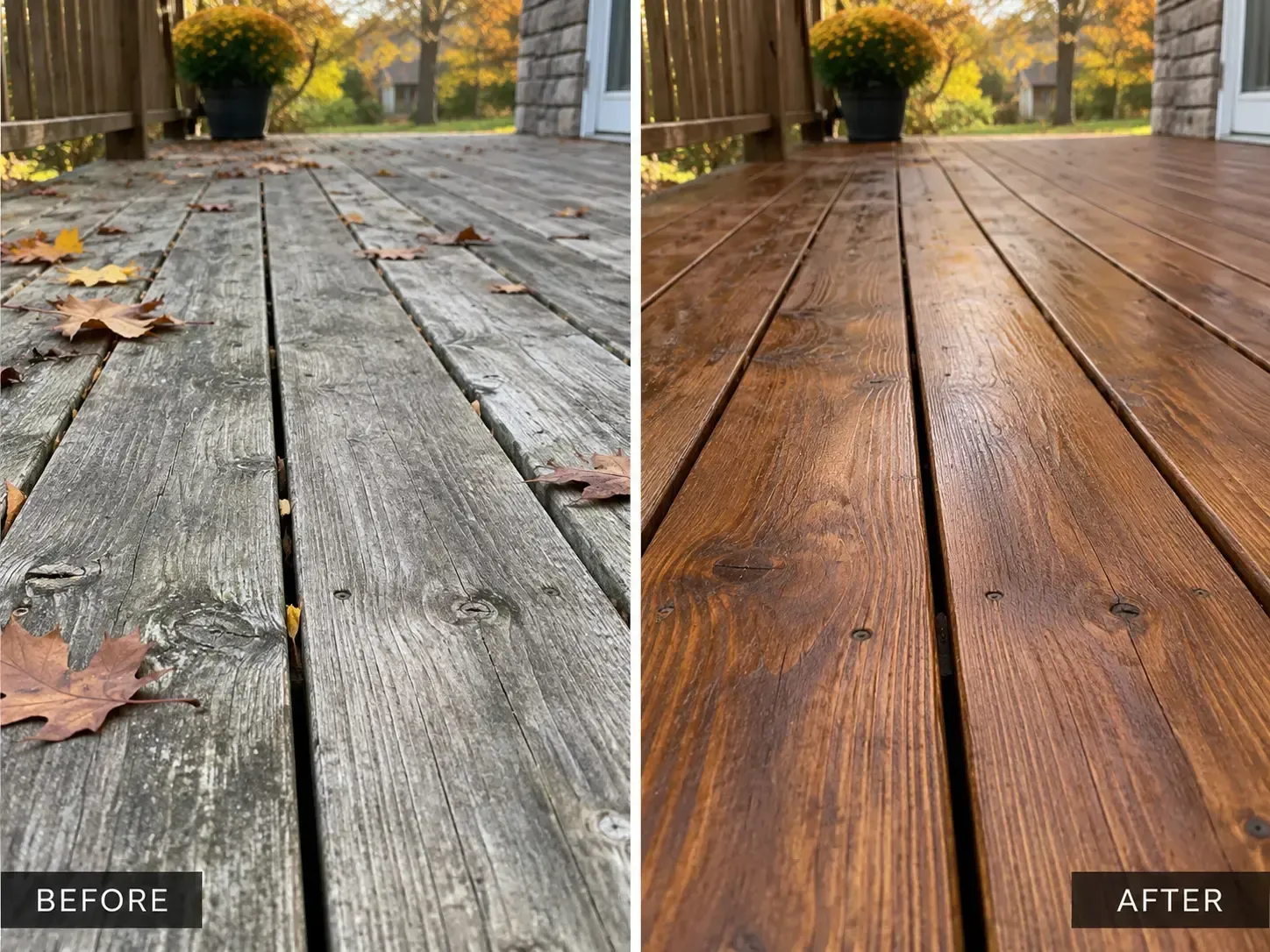
Leaves, pine needles, and organic debris trap moisture against the wood or composite surface. Sweep and clean your deck or patio, paying close attention to gaps between boards where debris builds up and holds water against the structure.
Inspect for Loose or Damaged Boards
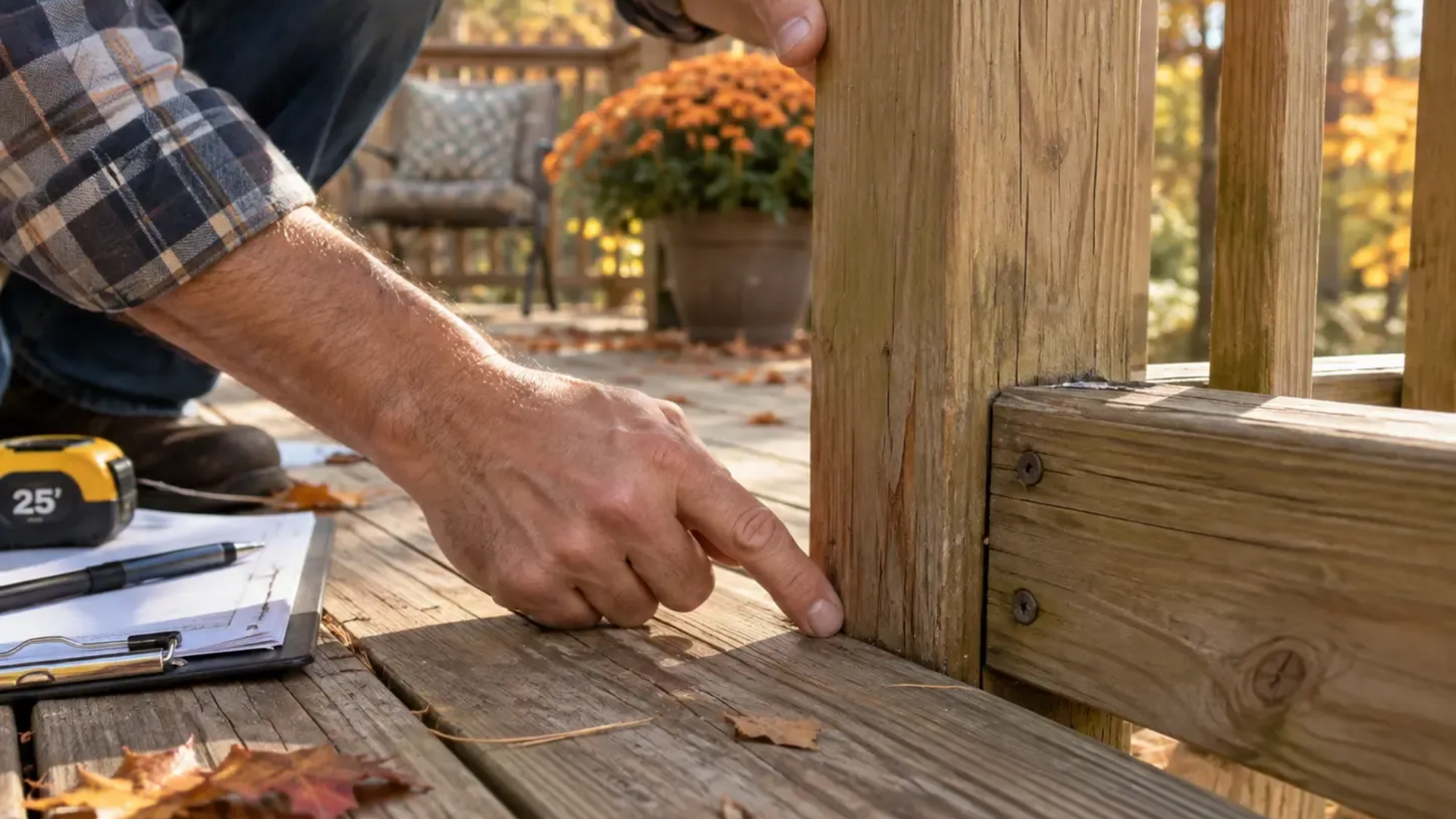
Walk the full deck and check for:
- Boards that flex, feel soft, or show visible cracking
- Popped or rusted fasteners
- Railings that wiggle or feel less secure than they should
- Any discoloration that could indicate early rot
Small issues caught now are simple fixes. The same issues left through a Maine winter often mean board replacement come spring.
Reseal or Stain Exposed Wood
If your deck's sealant has worn thin, fall is the last good window to reapply before temperatures drop too low for proper curing. A fresh seal creates a barrier against the moisture that causes the most winter damage.
Check Footings and Structural Supports
Snow load adds real weight to a deck structure. If footings have shifted, settled, or show signs of instability, have them assessed before adding that weight. This is especially important for older decks or those attached to homes that have seen other structural changes.
Don't Forget Patios and Hardscaping
Stone or paver patios can heave and shift with freeze-thaw cycles if not properly maintained. Check for settling, gaps between pavers, or drainage issues that could worsen once the ground freezes and thaws repeatedly through winter.
When to Call a Professional
Surface cleaning and staining are manageable DIY tasks for many homeowners. But structural concerns — soft framing, shifting footings, or railings that don't feel solid — are worth a professional assessment. Catching a structural issue in the fall is far easier (and cheaper) than dealing with a failed deck component under a foot of snow.
FAQ: Fall Deck & Patio Maintenance
When should I do fall deck maintenance in Maine?
Aim for September through mid-October, before temperatures consistently drop below the range needed for sealants and stains to cure properly.
Can I leave deck maintenance until spring instead?
It's not recommended. Moisture trapped over winter causes freeze-thaw damage that's often worse — and more expensive to fix — than if the deck had been cleaned and sealed in the fall.
How do I know if my deck has structural problems versus just cosmetic wear?
Cosmetic wear includes surface graying, minor staining, or small surface cracks. Structural concerns include soft or spongy boards, loose railings, shifting footings, or fasteners pulling away from the frame — these warrant a professional inspection.
Does a composite deck need the same fall maintenance as wood?
Composite decking doesn't need sealing, but it still benefits from thorough cleaning and an inspection of the underlying structural frame, which is typically still wood.
Does Woodworth Builders repair decks, or only build new ones?
We handle both — from targeted repairs and structural fixes to full deck rebuilds and new construction, throughout Southern Maine and the New Hampshire Seacoast.